
Puppet Praxis
On Anarchy & Animate Cardboard

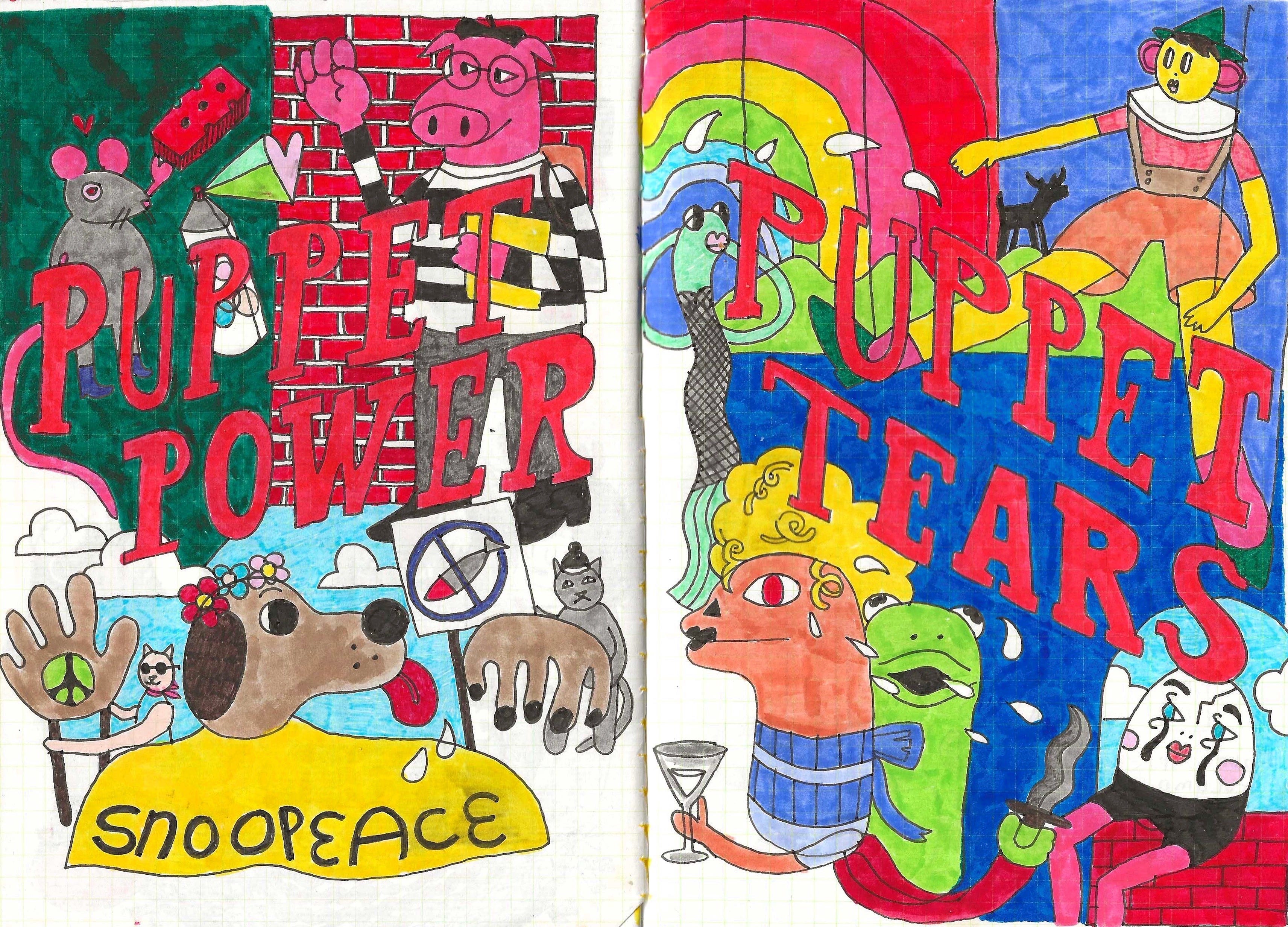
“My proximity to folk punk gave me a deep reverence for cardboard and things found in the trash.”
These words recently tumbled out of my mouth while in conversation with my friend Bethy Squires as we recorded an episode of I Just Think She’s Neat, her podcast about Marge Simpson.
She had asked me when I’d started to think of myself as an artist, one of the few fixed identity categories into which I’m willing to pour myself.
Bethy: “What did you identify as before you were an artist?”
Me: “A punk…” [laughing awkwardly] “A revolutionary anarchist.”
A great interlocutor asks questions whose answers surprise you. This off the cuff pronouncement revealed something fundamental.
Folk Punk and its Discontents
In 2006 I lived in Bloomington, Indiana, a liberal college town sequestered in a deep red state. Bloomington has birthed many independent music labels and sustained scores of experimental acts alongside commercial indie groups. Despite its contributions to better, cooler currents in music history, at a certain time the town was intertwined with the DIY punk label Plan-it X. Operating philosophy: “If it ain’t cheap it ain’t punk.”
James Payne, an Ohio-born poet and Bloomington expat offered this generous framing of folk punk: “A self aware reversion to easily transportable, cheap and outmoded instruments associated with American folk music…against the backdrop of a materialist, imperialist Bush administration in order to have the form of punk music better match the ethos of its activist content.” (emphasis mine)
Bethy’s take is simpler: “The musical equivalent of asking for change. Acoustic music about how the government sucks.”
Fond memories of folk punk alight on its outliers. Eagle Ager performed in the parking lot at the 2006 Plan-It X Fest, betraying their marginal involvement with the scene inside. Members skittered across the blacktop in haphazard cardboard igloos, quietly playing percussion instruments within. Cardboard cans occasionally sprouted legs and engaged in chase. A small, hyper woman hocked their merch: spray painted tank tops with a boob and an eagle stenciled across the chest. She handed me a business card printed on an American flag stock graphic background: Eagle Ager, sculpture band – the American Psycho scene in an art damaged blender.
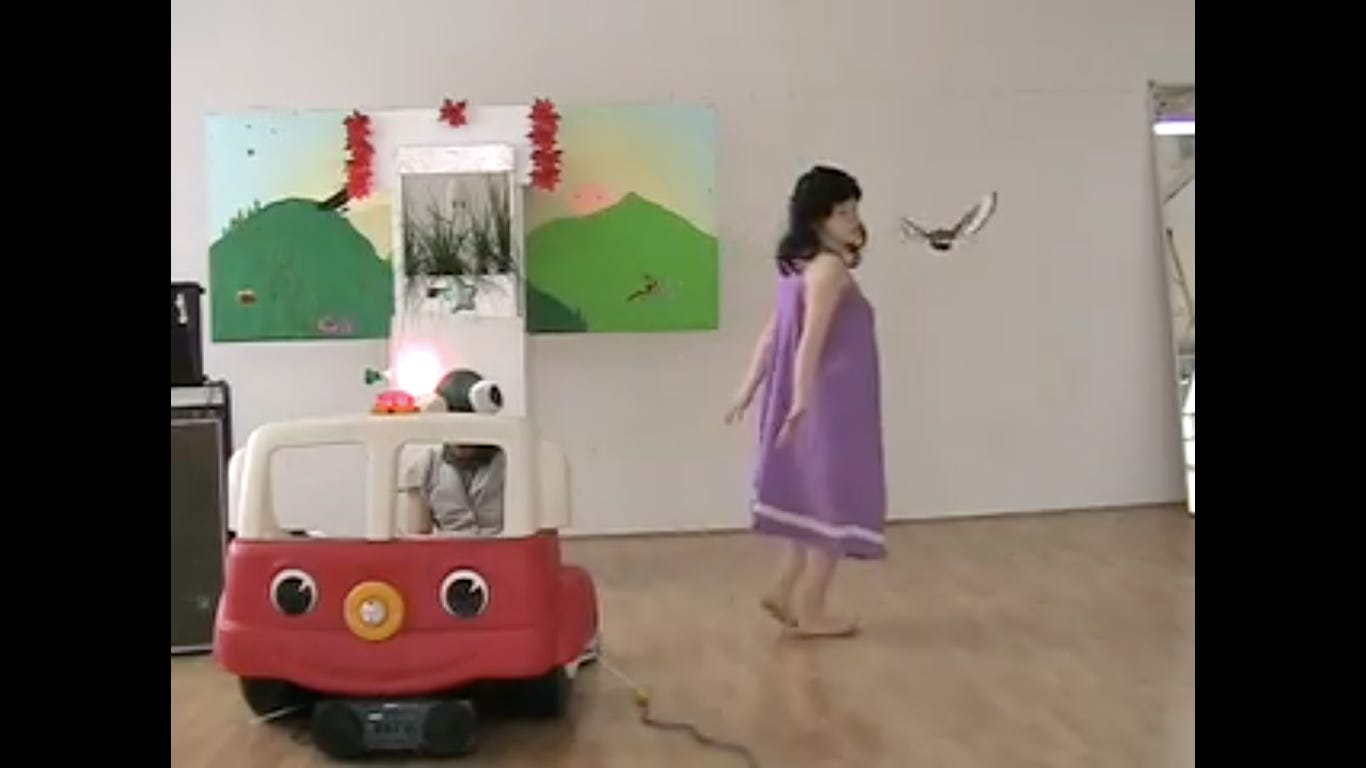
Unearthed Youtube videos bear out these memories (and link to their defunct Myspace !) and demonstrate a vital counterpoint to the sonic spare changing and cloying ineptitude of folk punk.
Puppet Damage
I’ve borne witness to many more of folk punk’s arty extracurriculars ranging from the incandescent (Missoula Oblongata) to the painful (a mountaintop removal shadow puppet show with a capella Springsteen soundtrack).
The camera pans out from folk punk to Crimethinc, Anti WTO protests, Reclaim the Streets, the Rainbow Gathering, Bonnaroo and Phish, Lollapalooza and Grateful Dead parking lot antics. These projects, for better or worse, all owe spiritual debt to Bread and Puppet.
Vintage pictures of Bread and Puppet are transcendent. Hippies, motherfuckers and modern dancers collaborate in street theater, as joyful as they are angry. Protests could be pageants – delights for the eyes. Giant papier mache heads on poles march through city thoroughfares swinging massive articulated limbs. Billowing vestments cloak their inner workings.
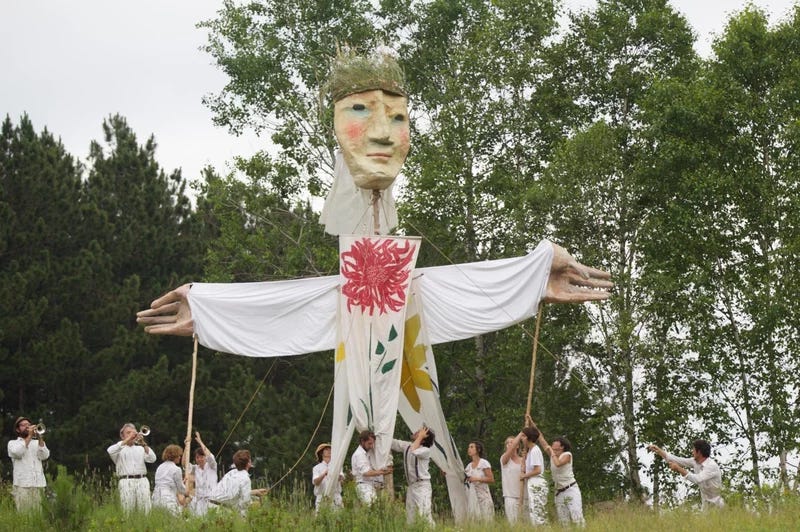
A few years ago I investigated the Bread and Puppet apprenticeship in Burlington and was struck by the cranky tone of its open call.
“THIS IS NOT A RESIDENCY !” The application cautioned in capital letters, “We use outhouses, conserve water, compost leftovers and generally try to be thrifty. Accommodations are very simple, even rugged, and most apprentices live in tents… Apprentices need to be self-motivated and adaptable, and not just in it for “workshops.”
“Sounds like a good opportunity for emotional abuse AND lyme disease,” my friend
Emily quipped.
I was weirdly transfixed by this tension, imagining the crabby band of senior puppeteers at the helm. It felt like a symbol of broken utopia, like the burning Bucky dome, exposing the frayed wires of a midcentury counterculture propelled by the male gaze and neutered by New Age snake oil. Or maybe I’m Adam Curtiss-pilled.
Living in LA has softened my receptivity for New Age currents in ways my inner Marxist teen couldn’t have imagined. My participation in Laraaji’s workshop embodies this openness.
Laraaji
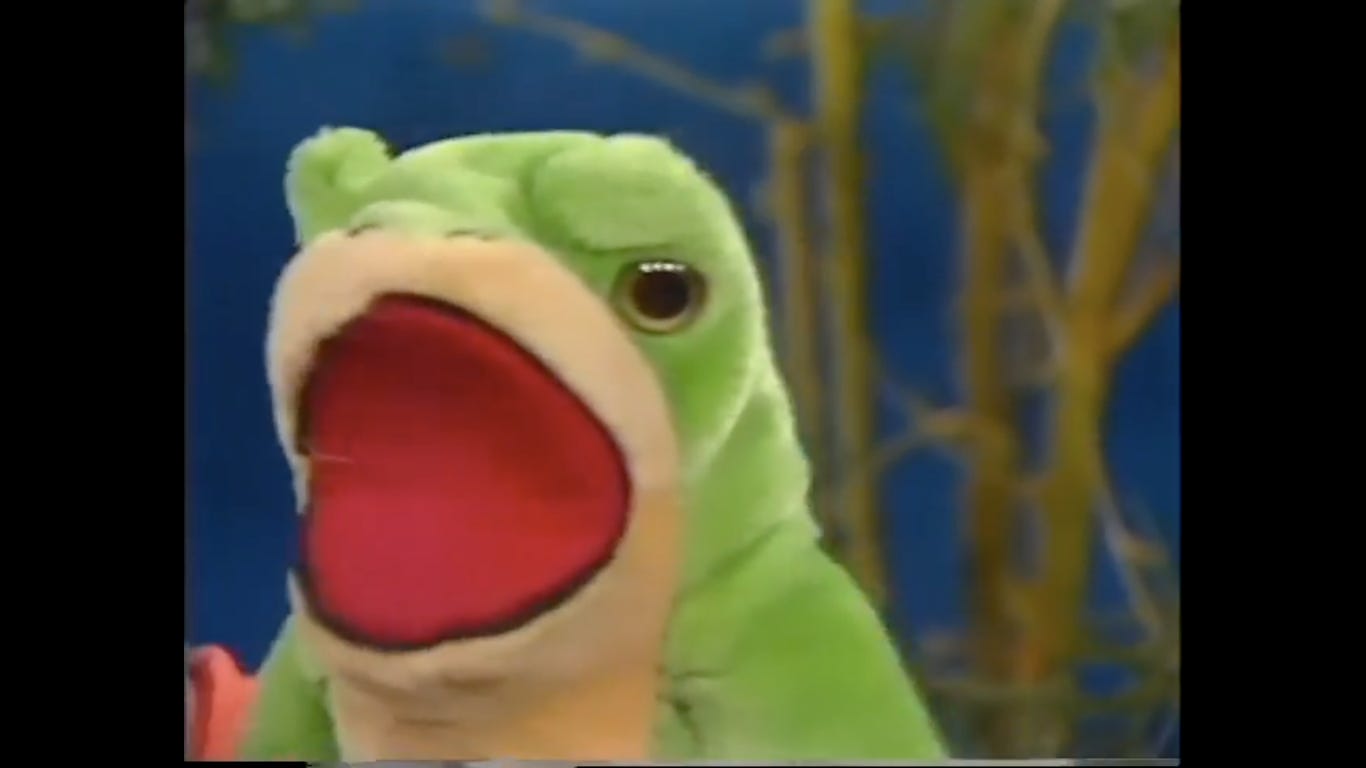
Bob Baker Marionette theater hosts Larraji’s Laughter As Meditation workshop in Spring 2024. Laraaji is a new age troubadour of the chillest ilk, making meditation music before and after it was cool, and he is no stranger to puppetry. On his 1986 public access show Celestrana his frog puppet Dr. Love vibrates and croons, its soft red mouth forming startling shapes, the heartburn blur of VHS tacking the video to its date of origin.
John’s synopsis:
“A singing frog named Love let it loose over treated autoharp after Laraaji gave a sermon. The frog’s mouth was red. There were small wind chimes. He could have been a green bear.”
Now
Now, in a flowing orange dashiki and strings of beads he strums his zither as his partner Arji smiles from ear to ear. Laraaji coaches us to feel our diaphragms, consider our digestive organs. He tells us to be in our water bodies, wiggly like we’re full of liquid. We’re laying on the carpet, laughing at the ceiling, knocking off the body’s cobwebs. My endocrine system hasn’t been doing so hot, so anything could help.
The Bob Baker puppeteers, clad in red outfits and character shoes, shimmy their marionettes into the crowd, maintaining faraway expressions.
Freak Nature
Freak Nature Puppets position themselves as the underdog rivals to Bob Baker, the puppet establishment. Like Eagle Ager, cardboard and couch cushions are the main line of their productions. In their performances they sweat and spit, face paint running, breaking character as often as they maintain it. Scripts are absurd (Nosferatu’s Sweet 16) or offer the barest platform for improvisation (dating show).
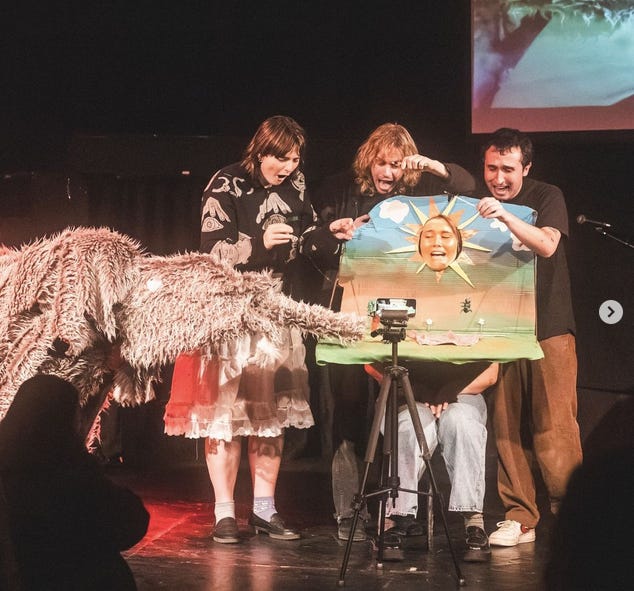
They are effortlessly anarchic, dragging their giant assemblages through the crowd, whacking lucky audience members with the trailing extremities. If they have a party line, it is collaboration. It’s tough to be a puppet troupe of one. In December they hosted Puppet Sundae, where participants met, constructed puppets, wrote scripts and performed with them in a breathless 24 hours.
Not to sound pretentious, but they exemplify the Hegelian dialectic.
Unlike their folk punk predecessors, they’re not starting with politics then building agitprop around it. They aren’t peddling any solutions or making health claims. Art is the message and the connective tissue. Sometimes puppets are machines that kill fascists, sometimes they build friendships.
https://www.youtube.com/watch?v=f_FJXBxWbI8